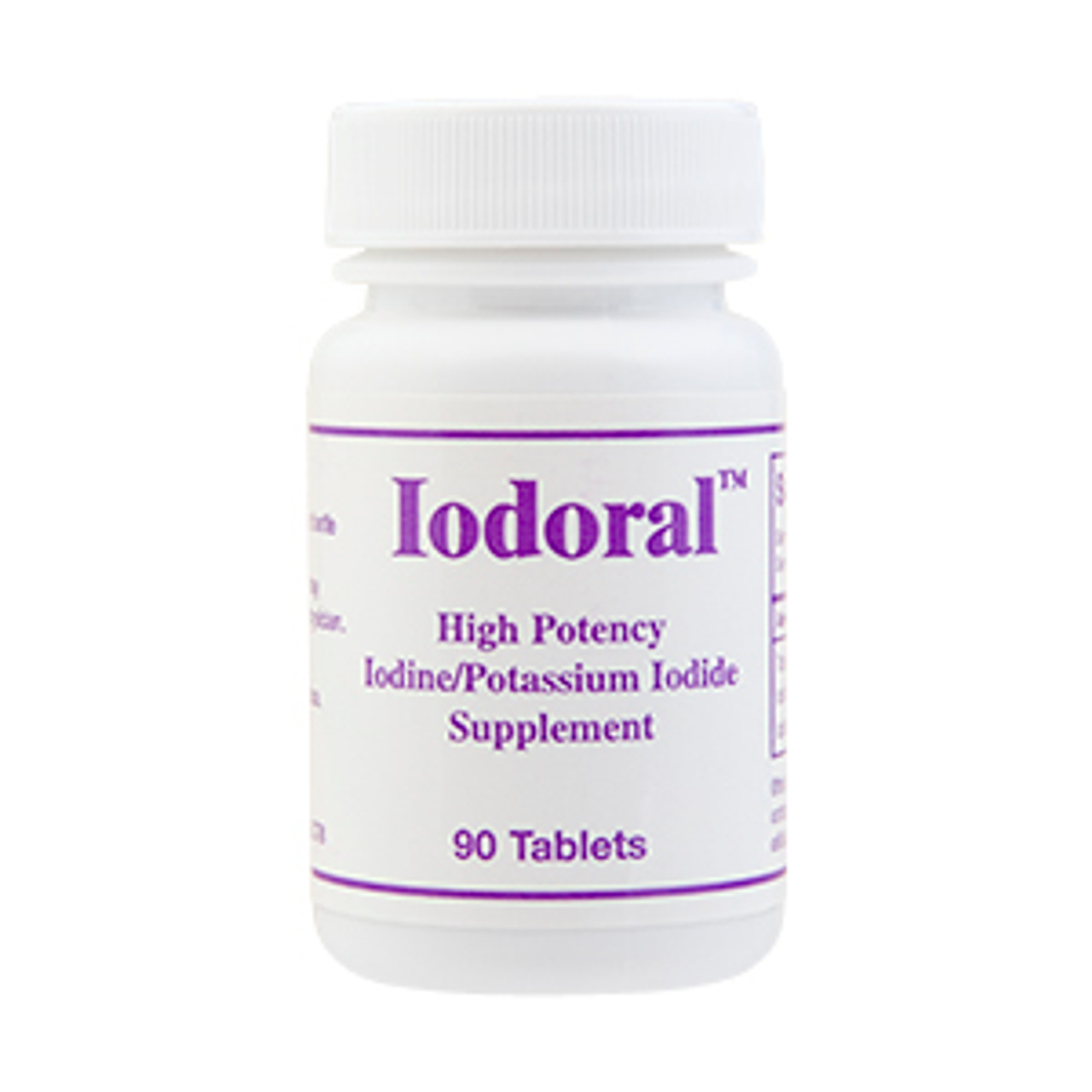

Iodine and Iodide (I2 and I-) are needed by the body. Iodine and Iodide seems to decrease estrogen sensitivity. Many women with estrogen dominant disease feel better with iodine. Americans and Europeans are deficient in Iodine. Americans and Europeans are also poisoned with bromine and fluoride. Bromine and fluoride may take the place of iodine around the thyroid hormone rendering the thyroid hormone useless. Iodoral or Lugols iodine may be taken. Iodoral has less gastric upset, does not stain, and does not have an unpleasant taste, but is expensive. Lugol's Iodine stains, has an unpleasant taste, and may give you gastric upset, but is cheap.
As of January 2011, I became impressed with how important iodine was. I had an endometriosis patient in the UK with endometriosis pain. On the program of xenoestrogen avoidance and progesterone, her pain improved by 80% over the course of several months. However, after taking iodine for a month the pain disappeared completely. Another patient in the UK had 2 small fibroids and followed my program for 5-6 months, but saw no decrease in the size of the fibroid. She bought a small bottle of iodine that was on clearance in the grocery store for 50 cents. After taking this iodine for 3-4 weeks, her fibroid began to disappear. She even passed pieces of the fibroid!Several studies have demonstrated a relationship between low iodine intake and fibrocystic breast disease both in women and laboratory animals (1,2). The minimum amount of iodine required for control and prevention of fibrocystic breast disease is equivalent to 0.1 mg/kg body weight per day. For example, for a 50 kg woman, the daily amount of iodine would be 5 mg. The thyroid gland needs iodine to function properly. The original study done 80 years ago to control goiter in adolescent girls used 9 mg daily (3).
During the early 1900's, the iodine/iodide solution called Lugol solution was used extensively, effectively and safely in medical practice, for both low activity and above normal activity of the thyroid gland (4). The recommended daily intake for iodine supplementation was from 0.1 to 0.3 ml of Lugol solution containing 12.5 to 37.5 mg total iodine. That amount was mentioned as lately as 1995 in a book on Pharmaceutical Sciences (5). Several investigators have shown convincing evidence connecting inadequate iodine intake and breast cancer (6). Japanese women living in Japan consumed a daily average of 13.8 mg total elemental iodine and they experience one of the lowest rates of breast cancer, ovarian cancer, and uterine cancer (6). In the 1960's, one slice of bread contained the full RDA of 0.15 mg of iodine. The risk for breast cancer was then 1 in 20 (7). Over the last two decades, iodine was replaced by bromine in the bread making process. Bromine blocks thyroid function and may interfere with the anticancer effect of iodine on the breast (4). Now, the risk for breast cancer is 1 in 8 and increasing 1% per year (7).
The RDA limits for vitamins and minerals were established after World War II. One of the last essential elements included in the RDA system was iodine, established in 1980 and confirmed in 1989 (8). The RDA for iodine was based on the amount of iodine/iodide needed to prevent goiter, extreme stupidity and hypothyroidism (9). The optimal requirement of the whole human body for iodine has never been studied. Therefore, the optimal amount of this element is unknown. Based on demographic studies, the mainland Japanese consumed an average of 13.8 mg daily and they are one of the most healthiest people on the planet earth (6). Lugol solution is a time tested preparation with a proven track record for over 150 years. Two drops contain 12.5 mg iodine/iodide, an amount very close to the 13.8 mg average intake of mainland Japanese.
Rationale for Iodoral formulation
Administration of the iodine/iodide in liquid solution is not very accurate, may stain clothing, has an unpleasant taste and causes gastric upset or irritation. Iodoral is a precisely quantified tablet form containing 5 mg iodine and 7.5 mg iodide as the potassium salt. To prevent gastric irritation, the iodine/iodide preparation was absorbed onto a colloidal silica excipient; and to eliminate the unpleasant taste of iodine, the tablets were coated with a thin film of pharmaceutical glaze (10).
Suggested Dose
The suggested daily amount is 1-4 tablets as recommended by your physician. Work closely with your physician while on the Iodoral program. Report to your physician any history of thyroid surgery and/or radiation, chronic lymphocytic thyroiditis (Hashimoto's), and any previous problem with your thyroid. Before starting Iodoral your physician will order blood tests for hematology, blood chemistry and thyroid functions. He will also perform an ultrasound of your thyroid to measure the size and appearance of your thyroid. Depending on the results of the thyroid function tests and ultrasound, he may order some blood tests for thyroid antibodies. If you are taking thyroid hormones, let your physician know about it. Be aware that Iodoral enhances the response of your body to thyroid hormones (4,6). Subjects on Iodoral feel warmer in cold environments and that is to be expected. However, you will need to cut down the amount of thyroid hormones, if you experience palpitation, anxiety, increased sweating and intolerance to heat. That is because Iodoral decreases your need for thyroid hormones. Your physician will guide you in titrating downward the amount of thyroid hormones. Your physician will reevaluate you one month afterward if you are on thyroid hormones, and 3 months if not. Keep a record of what you observe while on Iodoral and show it to your physician. To test whole body sufficiency for iodine, 4 tablets of Iodoral 12.5 mg or one tablet of 50 mg (IOD-50) are ingested, followed by 24 hr. urine collection. The more deficient a subject is in iodine, the more iodine is retained by the body and the least excreted in the urine. Sufficiency is achieved when 90% or more of the ingested amount is excreted in the urine. In most subjects tested, 3-4 tablets of Iodoral were required to achieve whole body sufficiency within 3 months and the body retained approximately 1.5 gm iodine at sufficiency (4,8). The best response with fibrocystic breast disease was observed with ingestion of 4 tablets per day (8). Check with your physician for more information about the loading test.
References
1) Ghent, W., et al, Can. J. Surg., 36:453-460, 1993.
2) Eskin, B., et al, Biological Trace Element Research, 49:9-19, ,1995.
3) Marine, D., Atl med. J., 26"437-442, 1923.
4) Abraham, G. E., The Original internist, 11:17-36, 2004.
5) Gennaro A. R., Edition, 1995, Mack Publishing Co., 1267.
6) Abraham, G. E., Flechas, J.D., Hakala, J.C., The Original Internist, 9:30-41, 2002.
7) Epstein, S.S., et al, Breast Cancer Prevention Program Macmillan, NY, 1998, pg5.
8) Abraham, G.E., The Original Internist, 11:(2) 29-38, 2004.
9) Braham, G.E., Townsend Letter, 245:100-101, 2003.
10) Abraham, G.E., Flechas, J.D., Hakala, J.C., The Original Internist, 9:5-20, 2002.
Potential Side Effects
Ingestion of iodine and/or iodide has been associated with certain complaints. If you experience any of the following stop ingesting Iodoral and contact your physician. These side effects are rare. Only one of 1,000 patients experience these side effects. Typically, stopping the Iodoral for 3-4 weeks, stops the side effects. Metal taste from iodine may be eliminated by taking Chlorophyll anecdotally from Dr. Flechas and Dr. Sherry Tenpenny.
Acne-like skin lesions in certain areas of your body
Headache in the frontal sinus area
Unpleasant brassy taste
Increased salivation and sneezing.
Contact your physician if you experience any unusual symptom since starting on Iodoral.
Taking iodine will cause bromine to come out of the body stores and may give you a frontal headache, metallic taste in the mouth, and increased salivation. Again, this is NOT an iodine reaction, this is a reaction to bromine poisoning. In rare cases, one out of 400 patients, the thyroid cells can break apart and your body can develop antibodies against the thyroid and a Hashimoto's Thyroiditis can develop. We recommend starting at 3 mg/day. If there is no pain in the thyroid or throat swelling, then you may slowly ramp up to 50 mg/day for 3-4 months. If there is pain in thyroid or throat swelling, please stop the iodine.
If you already have Hashimoto’s Thyroiditis, I recommend getting rid of the Hashimoto’s permanently before starting Iodine. Call us for more information on getting rid of Hashimoto’s Thyroiditis permanently.
You may get rid of this rare adverse reaction by detoxing with sea salt, taking 1/4 tsp to 1/2 tsp of sea salt and then drinking 2 liters of water for 2-3 months. Also stop being poisoned with bromine! Bromine is found in soft drinks as brominated olive oil. Brominated vegetable oil is used to solubilize citrus oils in water. Bromine is also found in Sports Drinks, commercial bakery products, and medications such as sleeping pills, and asthma inhalers. If you keep taking these products that contain bromine you cannot detox from bromine.
6 Reviews Hide Reviews Show Reviews
-
Have used various iodine supplements.
Have used various iodine supplements. Iodoral works the best. Granted...reviews of supplements (minus blood testing) is subjective, but this form of iodine gives the best results of any I have used.
-
I found this is the best
I found this is the best place to purchase this product and I'm happy with the quality.
-
Very easy to take.
Very easy to take.
-
Works great I've lost noticeable weight
Works great I've lost noticeable weight in my midsection just by taking this because it's allowing my thyroid to work again for the first time in years! Just beware of bromine toxicity when first start taking it, increase the dose very slowly.
-
I see no negative side effects
I see no negative side effects from iodoral. I will learn more in the future as I deal with my estrogen dominant cancer.
-
This product is one of those
This product is one of those important onces that helps so much you forget how badly you need it! I neglected to re order last fall and with in two months I remembered what life was life before I took it. I reordered and now, got back into feeling so much better again.